
Dedicated courses addressing sustainability and SDGs (17.4.2)
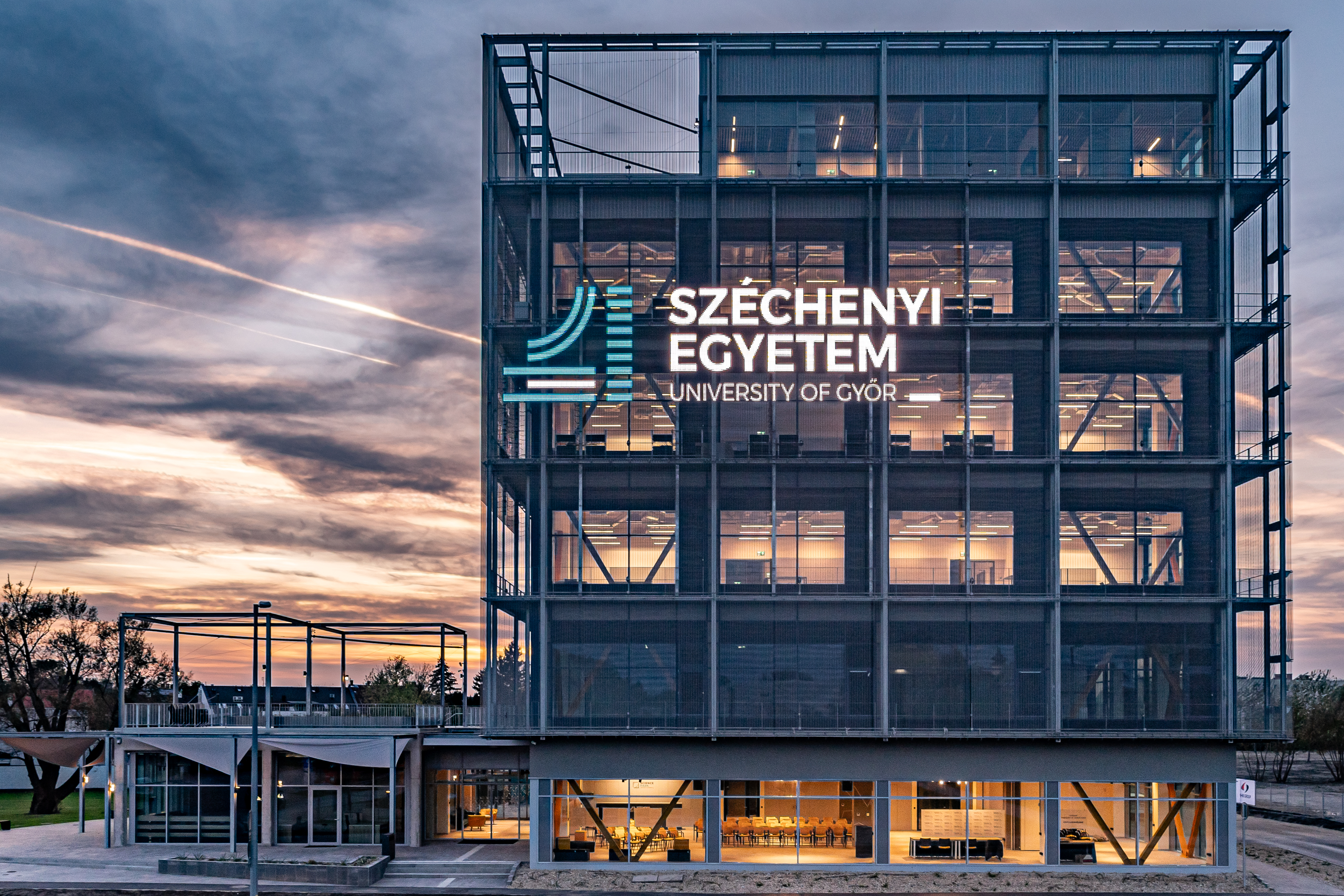 Sustainability is embedded throughout the educational and research activities of Széchenyi István University and is integrated across all levels of study, from bachelor's and master's programmes to postgraduate, professional, doctoral, and short-cycle training programmes. The University aims to equip students with labour-market-relevant knowledge while fostering social responsibility, ethical professional behaviour, and a sustainability-oriented mindset. Students are expected not only to acquire disciplinary expertise but also to understand and apply sustainability principles within their professional fields and contribute actively to addressing local, national, and global sustainability challenges.
The University's educational portfolio incorporates sustainability-related topics across a broad range of disciplines. Subjects such as circular economy, life-cycle assessment, energy efficiency, sustainable mobility, climate change adaptation and mitigation, environmental protection, biodiversity conservation, corporate social responsibility, sustainable governance, and responsible business practices are delivered both through dedicated sustainability courses and through integration into disciplinary curricula.
Dedicated Sustainability-Related Study Programmes
Széchenyi István University offers dedicated sustainability-focused programmes at multiple educational levels.
Bachelor's Degree Programmes (BSc)
- Environmental Engineering
- Agricultural Water Management and Environmental Technology Engineering
Master's Degree Programmes (MSc)
- ESG (Environmental, Social and Governance) Expert MSc
- Environmental Management Agricultural Engineering
- Regional and Environmental Economic Studies
- Agricultural Water Management Engineering
The ESG Expert MSc programme represents a major milestone in sustainability education. Developed by the University in 2023 and accredited in 2024, the programme adopts a multidisciplinary approach to sustainability and prepares graduates to support organisational sustainability transitions, ESG reporting, climate action, resource efficiency, circular economy implementation, and responsible governance. The programme explicitly incorporates sustainability challenges and the United Nations Sustainable Development Goals into its curriculum.
 Postgraduate and Professional Programmes
- Energy Loss Auditor
- Organic Farming Specialist
- Accredited ESG Advisor Programme
These programmes provide specialised professional competencies in areas such as sustainable agriculture, resource efficiency, energy management, ESG implementation, sustainability reporting, and sustainable corporate transformation.
Doctoral Education
Sustainability-related research themes are available within several doctoral schools and research fields, including engineering sciences, agricultural sciences, environmental sciences, economics and management, transport systems, renewable energy, digitalisation, sustainable mobility, corporate sustainability, and climate-related research. Doctoral candidates contribute to interdisciplinary sustainability research through collaboration with the University's competence centres and industrial partners.
Sustainability Embedded Across the Curriculum
Sustainability themes are not confined to dedicated programmes. The University systematically integrates sustainability principles throughout its curricula. Engineering programmes focus on energy-efficient technologies, sustainable infrastructure, smart mobility, and renewable energy systems. Agricultural programmes address sustainable food production, biodiversity, water management, and precision farming. Business and social science programmes focus on ESG, responsible corporate governance, sustainable business models, social innovation, inclusion, and ethical decision-making.
The University continuously updates course content to ensure that students engage with the latest scientific knowledge and professional practices. Sustainability-related learning is reinforced through project-based assignments, case studies, applied research projects, guest lectures, industrial collaborations, dual education schemes, and partnerships with external stakeholders. These approaches allow students to experience the practical application of sustainability principles and gain competencies needed to contribute to the sustainable transformation of society and the economy.
Mapping Sustainability Across the Curriculum
As part of its 2025 Sustainability Report, Széchenyi István University conducted a comprehensive review of how teaching activities contribute to the UN Sustainable Development Goals (SDGs). The results demonstrate that sustainability-related content is embedded across hundreds of courses and nearly all disciplines offered by the University. Particularly noteworthy (as it is shown in Table) that the majority of courses is lined to SDG 4, ADG 9 and SDG 17 demonstrating, that SDGs are embedded across almost all academic disciplines and study programmes of the Széchenyi István University.
|
SDG |
Number of Relevant Courses |
Number of Relevant Degree Programmes |
|
SDG 1 – No Poverty |
79 |
90 |
|
SDG 2 – Zero Hunger |
133 |
112 |
|
SDG 3 – Good Health and Well-being |
186 |
121 |
|
SDG 4 – Quality Education |
681 |
197 |
|
SDG 5 – Gender Equality |
210 |
158 |
|
SDG 6 – Clean Water and Sanitation |
150 |
70 |
|
SDG 7 – Affordable and Clean Energy |
22 |
46 |
|
SDG 8 – Decent Work and Economic Growth |
244 |
155 |
|
SDG 9 – Industry, Innovation and Infrastructure |
597 |
164 |
|
SDG 10 – Reduced Inequalities |
271 |
142 |
|
SDG 11 – Sustainable Cities and Communities |
134 |
157 |
|
SDG 12 – Responsible Consumption and Production |
164 |
105 |
|
SDG 13 – Climate Action |
54 |
68 |
|
SDG 14 – Life Below Water |
15 |
17 |
|
SDG 15 – Life on Land |
127 |
126 |
|
SDG 16 – Peace, Justice and Strong Institutions |
80 |
82 |
|
SDG 17 – Partnerships for the Goals |
361 |
172 |
The summary of programs can be found in the Sustainability Report 2025 of the Széchenyi István University: https://sustainability.sze.hu/images/Dokumentumok/SZE_Fenntarthat%C3%B3s%C3%A1gi_jelent%C3%A9s_2025_v.1._2026-04-17.pdf