
Meaningful Education Around Sustainable Development Goals (SDGs) (17.4.1)
Széchenyi István University is committed to ensuring that sustainability and United Nations Sustainable Development Goals (SDSs) are embedded throughout its educational ecosystem and are relevant to all students, regardless of the discipline. Sustainability is not treated as a standalone topic but as a cross-cutting principle integrated into education, research, innovation, student projects, international programmes, industrial collaborations, and community engagement.
The University’s commitment is supported by dedicated institutional structures, including the Sustainability Competence Centre and the Department of Applied Sustainability, as well as by strategic initiatives that connect students with real-world sustainability challenges through project-based learning, interdisciplinary collaboration, industry partnerships, cultural programmes, and international experiences. Széchenyi István University actively develops sustainability awareness, ESG competencies, environmental responsibility, intercultural understanding, and global citizenship among students while providing opportunities to apply this knowledge in practice.
The institutional significance of sustainability is further reflected in Széchenyi István University’s dedicated sustainability platform, its participation in international sustainability rankings, and its continuous expansion of sustainability-related educational opportunities across all study levels and disciplines.
|
Institutional Commitment to SDG Education The Sustainability Website of the Széchenyi István University is a dedicated platform presenting activities related to all 17 UN SDGs, including courses, training opportunities, publications, programmes, events and institutional sustainability activities. https://sustainability.sze.hu/en_GB/home
The Sustainability Competence Center of Széchenyi István University coordinates sustainability-related educational, research and outreach activities and promotes sustainability awareness among Hungarian and international students. https://sustainability.sze.hu/fenntarthatosagi-kompetencia-kozpont
Department of Applied Sustainability is a dedicated academic unit responsible for sustainability-focused education and research in areas including circular economy, water management, renewable energies and ESG. |
Sustainability logo |
|
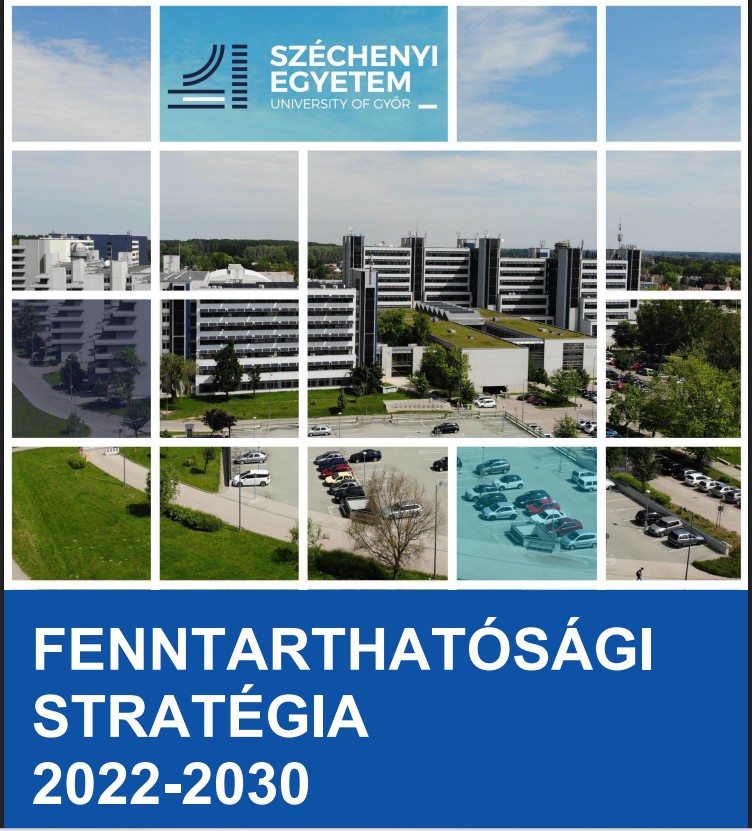
Sustainability strategy of Széchenyi István University (2022-2030) The Sustainability strategy of Széchenyi István University 2022-2030 establishes a university-wide commitment to meaningful education around Sustainable Development Goals, ensuring that sustainability principles are relevant and accessible to students across all disciplines. The strategy identifies “Quality and Ethical Education” as one of its four core strategic objectives and states that sustainability and ethical values should become an integral part of the educational process. The university is committed to embedding sustainability more deeply into curricula across all faculties, increasing the number of sustainability-related courses and student workshops, launching interdisciplinary sustainability education initiatives, and making general sustainability training available to all students. The strategy also emphasizes active student participation in sustainability projects, partnerships, and decision-making processes, while promoting diversity, equality, environmental awareness, and responsible citizenship. Through these measures, Széchenyi István University aims to equip all graduates—regardless of their field of study—with the knowledge, skills, and values needed to contribute to sustainable development and the achievement of the SDGs. Furthermore, the Sustainability Strategy is not a standalone document but an integral part of the university’s overall governance and operational framework. The strategy explicitly states that sustainability objectives and principles must be embedded across institutional plans, programs, and decision-making processes, ensuring that sustainability becomes a long-term and systemic element of the university’s activities. It also aligns with and complements several key institutional policies and strategic documents, including the Climate Action Plan, the Equal Opportunities Plan, the Gender Equality Plan, and the Institutional Development Plan. Through this integrated approach, Széchenyi István University ensures that sustainability, social responsibility, inclusion, and equality are embedded throughout its educational, research, and operational activities, creating a coherent institutional commitment to the Sustainable Development Goals (SDGs). The Sustainability strategy of Széchenyi István University (2022-2030) can be found here: https://sustainability.sze.hu/images/Dokumentumok/SZE_Fenntarthato%CC%81sa%CC%81gi_strate%CC%81gia_2022-2030.pdf |
Cover of the Sustainability Strategy of Széchenyi István University |
| Beyond the Curriculum: Supporting Meaningful Education for Sustainable Development | |
|
Audi Development Camp – Sustainability Education in Practice. The Audi Development Camp, jointly organized by Széchenyi István University and Audi Hungaria, provides students with an international, practice-oriented learning opportunity focused on sustainability and innovation. In 2025, 31 students from 20 universities across 17 countries participated in the programme, working in multidisciplinary teams on a real industrial challenge: the ESG-based analysis of Audi Hungaria’s water management system. Using a design-thinking methodology, participants developed solutions related to sustainability, environmental responsibility, and ethical operations, while receiving academic and industry mentoring from university experts and Audi professionals. The programme brings together students from engineering, business, software development, sustainability, and legal backgrounds, enabling them to gain hands-on experience, strengthen their sustainability competencies, collaborate in international teams, and engage directly with real-world SDG-related challenges. https://admissions.sze.hu/students-tackle-sustainability-challenges-at-sze-s-audi-development-camp |
Participants of the Audi Development Camp (Photo: Gergely Nagy) |
|
Culture Connects Programme – Promoting Cultural Awareness and Inclusive Education. As part of the national Culture Connects Programme, Széchenyi István University offers students the opportunity to earn academic credits through participation in cultural events and activities. Implemented in partnership with leading cultural institutions in Győr—including the Győr National Theatre, Győr Ballet, Győr Philharmonic Orchestra, and the Rómer Flóris Museum of Art and History—the programme broadens students’ understanding of cultural heritage, strengthens social and civic engagement, and provides international students with valuable insights into Hungarian culture. Through attendance at performances, exhibitions, guided tours, and other cultural events, students complement their academic studies with experiential learning that promotes intercultural understanding, personal development, and a broader appreciation of societal values beyond their disciplinary education. |
Participants of the Ceremonial Signing (Photo: András Adorján) |
|
Sustainable Energy Education and Research through Industry Partnership. Széchenyi István University strengthens sustainability education through strategic partnerships that connect academic learning with real-world challenges in the green transition. A notable example is its cooperation with Green Energy Investhor Plc, a leading company in Hungary’s renewable energy sector. Through this partnership, students gain access to industry-led lectures, seminars, internships, research opportunities, and thesis supervision in the fields of renewable energy, energy innovation, and ESG (Environmental, Social and Governance). The collaboration integrates practical industry expertise directly into university education and research, helping students develop the competencies needed to address sustainability challenges and support the transition to a low-carbon economy. In addition, the partnership promotes joint research, professional events, and knowledge-sharing activities that increase awareness of renewable energy and sustainable development among students and the wider community. https://admissions.sze.hu/sustainable-energy-education-and-research |
Participants at the signing ceremony (Photo: András Adorján) |
|
International Students for Peaceful Coexistence – Promoting Intercultural Understanding and Inclusion. Széchenyi István University’s “Me and My Country” programme series promotes intercultural dialogue, inclusion, and peaceful coexistence by providing international students with opportunities to present their home countries, traditions, and personal experiences to members of the university community and local youth. Launched in 2023, the initiative highlights shared values, openness, and mutual understanding, encouraging participants to explore cultural connections rather than differences. Through presentations, discussions, and cultural exchange activities, students develop intercultural competencies, global awareness, and respect for diversity while strengthening the sense of belonging within an international academic community. The programme also supports meaningful engagement between international and local communities, contributing to the university’s commitment to global citizenship, social cohesion, and inclusive education. |
Speakers at Széchenyi István University’s event (Photo: Máté Dudás) |
|
Széchenyi István University strengthened its cooperation with the Xantus János Zoo in Győr through a partnership focused on education, research, innovation, and sustainability. The collaboration supports joint educational and research activities in tourism, agriculture, animal sciences, and environmental protection, while zoo professionals contribute to student training, project supervision, and knowledge-sharing activities. Beyond university education, the partnership promotes biodiversity conservation, environmental awareness, and sustainable tourism development within the wider community, creating opportunities for public engagement with sustainability-related topics and nature conservation. Through cooperation with a community-based conservation institution, the University contributes to environmental education and the dissemination of sustainability knowledge beyond the campus. |
The cooperation agreement was signed (Photo: Máté Dudás) |

.webp)
.webp)


.webp)